 111
111 2
2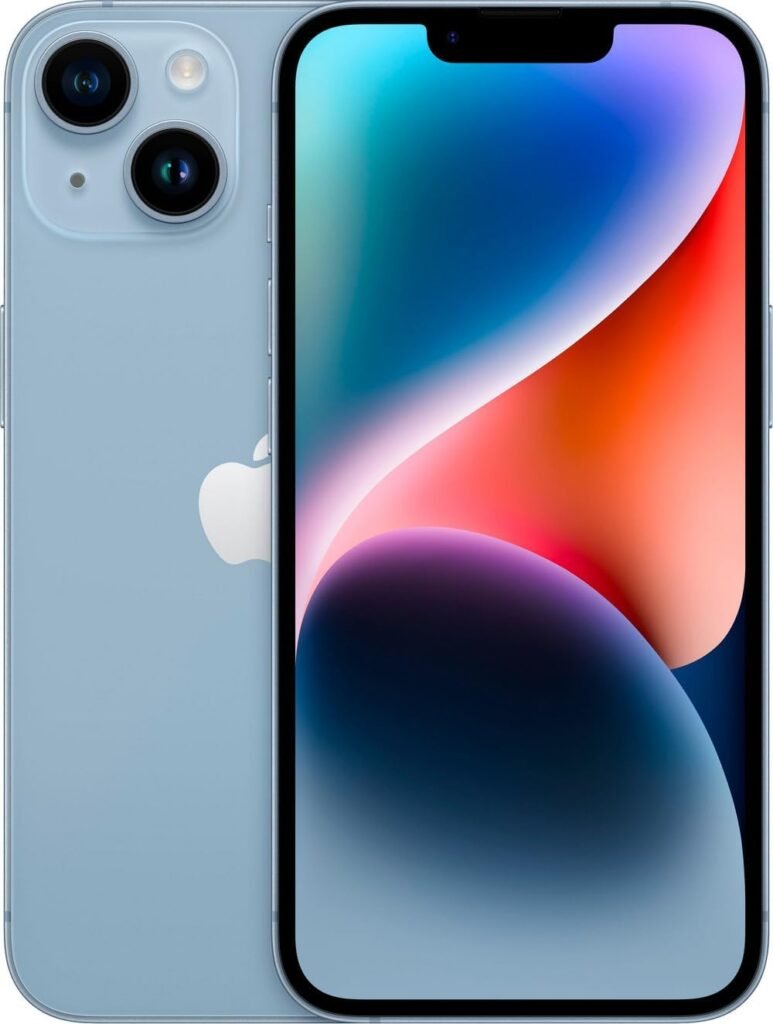 3
3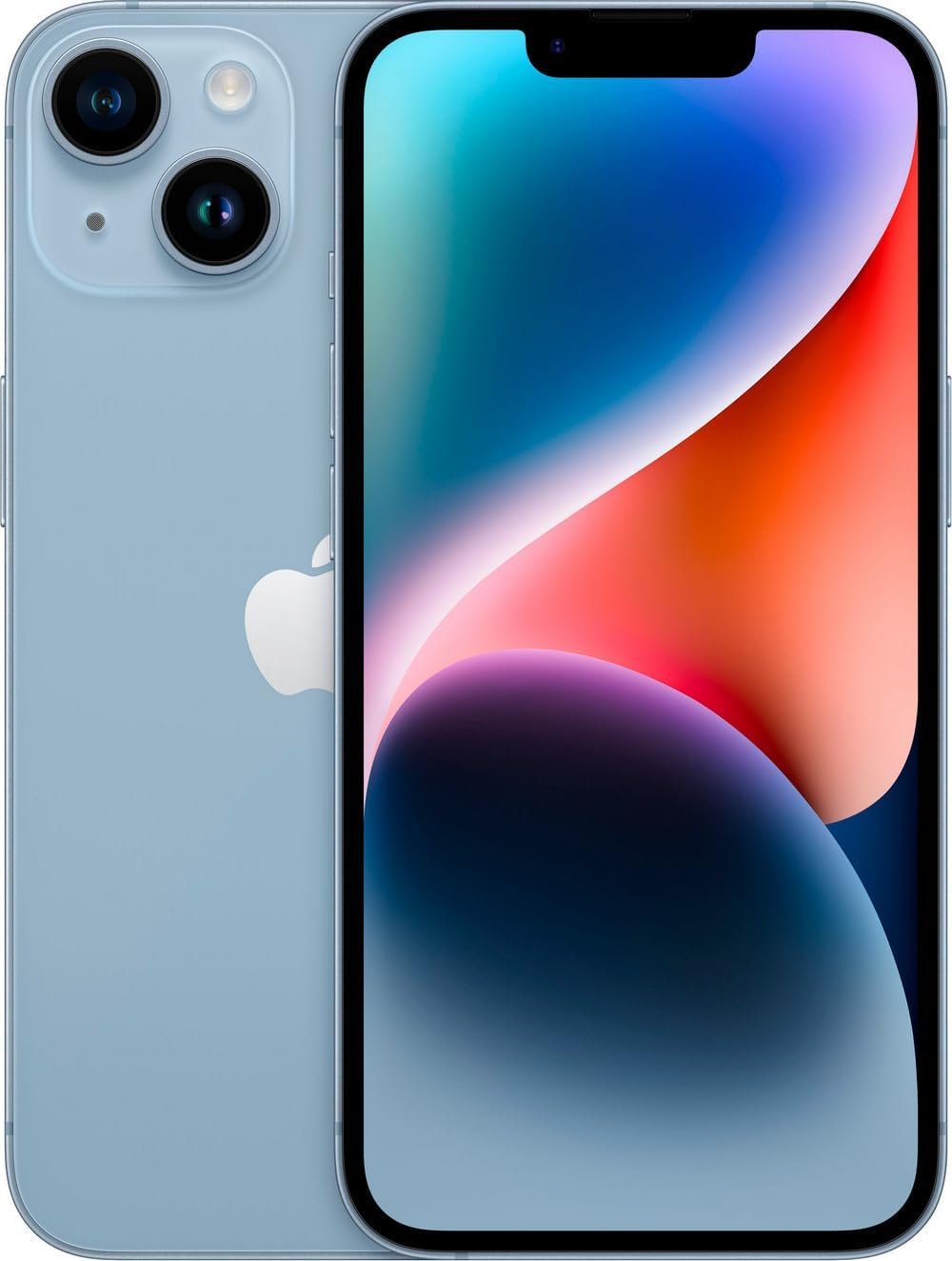
The landscape of premium mobile technology demonstrates that a smartphone does not need to be released in the current calendar year to deliver elite computing, high-fidelity imaging, and structural reliability. The Apple iPhone 14 (128GB, Blue), when accessed through a verified factory-unlocked and renewed pipeline, represents a highly calculated approach to modern hardware acquisition.
By bypassing the rapid depreciation cycle of brand-new flagship launches, this device offers an optimization of cost and capability. It provides a platform anchored by a 5-core GPU configuration of the A15 Bionic processor, a highly color-accurate Super Retina XDR OLED display, and the structural protection of a Ceramic Shield front façade.
For technical professionals, mobile educators, and digital deployment coordinators evaluating hardware assets, this comprehensive analysis explores the physical design, internal silicon pipelines, optical sensor matrices, and data ecosystems that govern the iPhone 14.
The chassis of the iPhone 14 balances high structural integrity with an ergonomic physical footprint. It features a flat-edge geometric profile constructed from aerospace-grade aluminum. This choice of alloy offers an optimal strength-to-weight ratio, ensuring the frame resists torsional bending forces while keeping the total mass of the device at a highly manageable 172 grams.
+-------------------------------------------------------------+
|                iPhone 14 Structural Layout                  |
+-------------------------------------------------------------+
| [Ceramic Shield Glass] -> High Impact Front Surface Layers  |
| [Aerospace Aluminum]   -> Rigid Perimeter Structural Band   |
| [Structural Glass Back]-> Optical Layer for Qi / MagSafe     |
+-------------------------------------------------------------+The Blue colorway uses a precise anodization treatment across the structural aluminum band, sealing the metal against sweat-induced corrosion and minor abrasions. This structural finish is paired with a gloss-treated rear glass panel that accommodates the internal wireless induction charging coils.
The visual interface of the iPhone 14 relies on a 6.1-inch Super Retina XDR all-screen OLED display panel. Operating at a native resolution of 2532-by-1170 pixels, the screen maintains a pixel density of 460 pixels per inch (ppi), which sits well above the threshold required for rendering crisp textual characters and dense mathematical symbols without anti-aliasing artifacts.
       [Direct Ambient Sunlight Sensor] -> Reads Local Light Array
                        │
                        ▼
      [True Tone Real-Time Adjust Engine] -> Alters Screen Pixels
                        │
                        ▼
     +----------------------------------------+
     | Dynamic White Balance Realignment Zone |
+----------------------------------------+The OLED panel features self-lit pixels that can switch off entirely to achieve a true 2,000,000:1 contrast ratio, providing deep black levels for high-contrast viewing.
| Luminescence Metric | Certified Operational Value | Scenario Trigger Condition |
|---|---|---|
| Typical Max Brightness | 800 nits | Standard indoor/outdoor manual operational mode |
| Peak HDR Output | 1,200 nits | High Dynamic Range local playback (Dolby Vision) |
| Color Space Footprint | P3 Wide Color | Extended gamut color palette mapping standard |
The display uses True Tone technology to manage visual comfort. Dual ambient light sensors monitor the color temperature and intensity of your immediate environment. The display engine then recalculates and shifts the panel’s white balance automatically. This ensures that digital documents mimic physical paper, reducing eye fatigue during extended reading sessions or deep code reviews under fluctuating lighting conditions.
While newer generations iterate on processing nodes, the A15 Bionic chip inside the iPhone 14 remains a highly capable mobile system-on-chip (SoC). Built on an efficient 5-nanometer fabrication process, this specific version features the upgraded 5-core GPU architecture previously reserved for the Pro tiers of prior generations.
+-------------------------------------------------------------+
|                  A15 Bionic SoC Topology                    |
+-------------------------------------------------------------+
| [2 Performance Cores]  -> Heavy Compute / High Clock Tasks  |
| [4 Efficiency Cores]   -> Continuous Low-Draw Processes     |
| [5-Core Custom GPU]    -> High-Bandwidth Raster Rendering    |
| [16-Core Neural Engine]-> 15.8 Trillion Ops/Sec Machine Learning |
+-------------------------------------------------------------+The central processing unit utilizes an asymmetrical hexa-core architecture:
The 5-core GPU provides a 20% increase in memory bandwidth over the standard 4-core A15 layout. This extra overhead prevents micro-stuttering when rendering complex UI animations or running heavy graphical web apps.
Working alongside the GPU is a dedicated 16-core Neural Engine. Capable of processing up to 15.8 trillion operations per second, this engine runs localized machine learning tasks on-device. It handles complex features like real-time Live Text OCR processing inside the camera app and immediate semantic sorting inside local image databases.
The rear camera matrix on the iPhone 14 shifts away from simple raw sensor data processing, relying instead on a computational photography pipeline managed by Apple’s Photonic Engine. This hardware and software integration improves image capture quality across a variety of focal challenges.
+-----------------------------------------------------------------+
|               Photonic Engine Pipeline Execution                |
+-----------------------------------------------------------------+
| [Raw Sensor Optical Light Capture]                              |
|               │                                                 |
|               ▼                                                 |
| [Deep Fusion Sub-Pixel Interrogation (Early Uncompressed State)] |
|               │                                                 |
|               ▼                                                 |
| [Neural Engine Spatial Details & Color Alignment Merging]       |
|               │                                                 |
|               ▼                                                 |
| [Final High-Fidelity 12MP Image Output Portfolio]              |
+-----------------------------------------------------------------+The primary 12-megapixel wide-angle camera uses a large sensor format with a wide ƒ/1.5 aperture and large 1.9-micrometer pixels. This setup increases hardware light sensitivity by nearly 49% compared to older designs, helping preserve image clarity in low-light environments.
Action Mode Mechanics: By utilizing the full sensor array with a dynamic crop boundary, Action Mode delivers stabilized video without requiring an external mechanical gimbal.
The 128GB internal flash storage configuration serves as a balanced operational tier for standard deployment. Operating on a high-bandwidth NVMe storage controller protocol, it ensures fast application launch times, quick system booting, and steady file read/write pipelines.
Choosing a factory-unlocked device offers distinct operational advantages over carrier-tied hardware. The device contains a broad network band layout that allows it to transition smoothly between different cellular providers without requiring complex firmware modifications or carrier approvals.
    [Unlocked Phone Architecture]
                 │
    ┌────────────┴────────────┐
    ▼                         ▼
[eSIM Profile 1 - Primary] [eSIM Profile 2 - Secondary]
- Local Data Carrier        - International Roaming Profile
- Corporate Voice Number    - Temporary Local Travel Data
For models deployed within the US market, the iPhone 14 drops the traditional physical plastic SIM slot entirely, shifting to a dual eSIM infrastructure. This system can store eight or more unique eSIM profiles simultaneously, with two networks capable of running actively in standby mode. This setup makes it simple to separate business and personal lines on a single device, or quickly provision a local data plan while traveling internationally.
The device manages power consumption through a 3,279 mAh lithium-ion battery core managed by internal power monitoring software. Thanks to the power efficiency of the 5nm A15 Bionic processor, the iPhone 14 delivers reliable, all-day battery life for standard mixed-use workflows.
+-------------------------------------------------------------+
|                Charging Recovery Timelines                  |
+-------------------------------------------------------------+
| [0 min]   0% Power State Baseline                           |
| [30 min]  ■■■■■■■■■■■■■■■■■■■■■■■■■ 50% Power Restored     |
| [85 min]  ■■■■■■■■■■■■■■■■■■■■■■■■■■■■■■■■■■■■■■■■ 100% Full|
+-------------------------------------------------------------+Acquiring electronic devices through verified renewal channels is a practical alternative to buying new, provided you understand the specific testing and condition standards required by the Amazon Renewed framework.
+-------------------------------------------------------------+
|              Renewed Diagnostics Pipeline                   |
+-------------------------------------------------------------+
| [IMEI Safety Audit]  -> Blacklist Verification & Unlock Check |
| [Hardware Test Run]  -> Digitizer, Mic, & TrueDepth Audits  |
| [Battery Compliance] -> Verification of Exceeding 80% State |
| [Sterilization Node] -> Microscopic Clean & Data Purge      |
+-------------------------------------------------------------+Before being approved for resale under the renewed classification, each iPhone 14 must pass a comprehensive multi-point inspection process:
For organizational planning, corporate compliance checks, or technical feature comparisons, the core specifications of the Apple iPhone 14 128GB are detailed below:
+------------------------+--------------------------------------------------------------+
| Technical Field        | Certified Component Specification                            |
+------------------------+--------------------------------------------------------------+
| Processing Platform    | Apple A15 Bionic (5nm node, Hexa-core configuration)     |
| GPU Core Allocation    | 5-Core Custom Graphical Processing Unit                  |
| Neural Infrastructure  | 16-Core Neural Processing Unit Engine                         |
| System RAM Allocation  | 6GB LPDDR4X High-Speed Memory                           |
| Non-Volatile Storage   | 128GB Flash Storage Capacity (Solid State NVMe)              |
| Display Panel Config   | 6.1" OLED Super Retina XDR (2532x1170, 460 ppi)             |
| Contrast Matrix Scale  | 2,000,000:1 True Black Contrast Performance                    |
| Primary Camera Module  | 12MP Wide Lensing System (ƒ/1.5, Sensor-Shift OIS)            |
| Secondary Camera Lens  | 12MP Ultra-Wide Optics (ƒ/2.4, 120-degree Field of View)     |
| Front Facing Camera    | 12MP TrueDepth Configuration (ƒ/1.9 with AutoFocus)          |
| Security Verification  | Face ID Biometric Authentication Framework                  |
| Ingress Safety Rating  | Certified IP68 Dust/Water Ingress Resistance Standards         |
| Interface Port Option  | Legacy Lightning Connectivity Hub Architecture               |
+------------------------+--------------------------------------------------------------+
Ultimately, the unlocked and renewed 128GB iPhone 14 in Blue provides an efficient balance of modern smartphone performance and smart value. By combining a reliable multi-core processor, a high-contrast OLED display, and a highly capable dual-camera system with the network flexibility of an unlocked device, this model serves as a practical, reliable options for power users, students, and professionals alike.