 111
111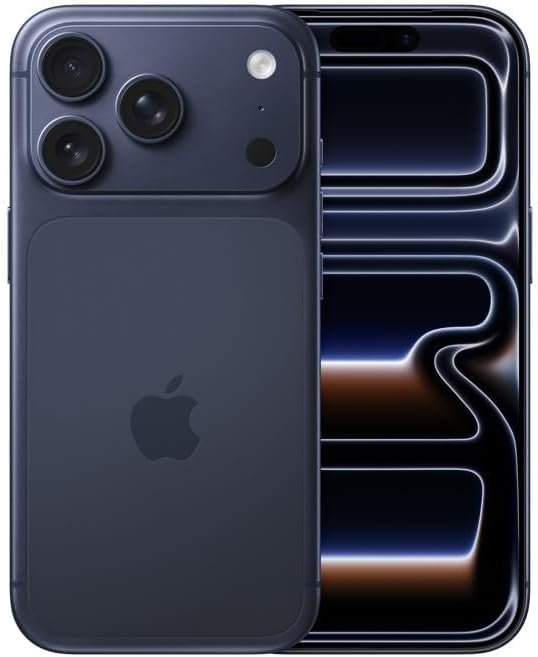 2
2 3
3 The progression of mobile computing infrastructure demonstrates that long-term hardware value is increasingly found at the intersection of advanced system updates and sustainable acquisition pipelines. The US version of the Apple iPhone 17 Pro (512GB) in its factory-unlocked, renewed configuration represents a calculated opportunity for technical professionals, enterprise deployment coordinators, and high-demand creators evaluating mobile hardware assets.
Rather than succumbing to the rapid initial depreciation curve of brand-new consumer electronics launches, analyzing this specific hardware configuration reveals a premium computing engine optimized for multi-year duty cycles. Anchored by the Apple A19 Pro silicon, a newly designed aluminum unibody thermal chassis, an all-48-megapixel triple camera plateau, and a pure dual eSIM network framework, this device sets a rigorous baseline for performance.
This technical analysis evaluates the structural engineering, processing pipelines, optical sensor matrices, data network protocols, and the rigid quality assurance metrics that define a verified renewed device in today’s mobile landscape.
The physical construction of the iPhone 14, 15, and 16 Pro models relied heavily on a multi-element internal structural frame bonded to a titanium outer band. The iPhone 17 Pro introduces a major architectural shift, moving to a heat-forged aluminum unibody chassis designed to balance structural durability with internal heat dissipation.
To handle the intense processing demands of the modern A19 Pro chip, the traditional graphite sheet thermal design has been replaced by an integrated, laser-welded vapor chamber cooling system.
+-----------------------------------------------------------------+
|              iPhone 17 Pro Unibody Thermal Stack                |
+-----------------------------------------------------------------+
| [Ceramic Shield 2 Glazing] -> Front Face Impact Armor          |
| [A19 Pro Silicon Engine]   -> Concentrated Core Heat Source     |
| [Laser-Welded Vapor Chamber] -> Liquid/Gas Thermal Transport Loop |
| [Forged Aluminum Unibody]   -> Structural Shell & Radiant Sink  |
+-----------------------------------------------------------------+
This thermal mechanism uses thin, hermetically sealed copper chambers containing a precise volume of water. As the system-on-chip (SoC) generates heat during heavy tasks—like long 4K ProRes video rendering or dense local machine learning operations—the water evaporates into gas, traveling away from the hot core. Once it reaches the cooler edges of the aluminum unibody, the gas condenses back into liquid and cycles back through a capillary wick structure.
This configuration delivers up to 40% better sustained performance under heavy processing loads, preventing micro-stuttering and thermal throttling during long work sessions.
The Deep Blue finish offers an understated, professional look, appearing nearly charcoal-black until ambient light reveals its blue metallic undertones. The coloration is achieved via an electric anodization process that grows an oxide layer directly out of the aluminum base metal.
Because it lacks the bright silver reflectivity of raw metals, the Deep Blue coating provides a clean, matte surface that resists smudging from skin oils. For professional environments that require a subtle, neutral device aesthetic, this finish fits cleanly into a corporate workspace.
The interactive surface of the iPhone 17 Pro is built around an upgraded 6.3-inch Super Retina XDR all-screen LTPO OLED display panel. Operating at a native resolution of 2622-by-1206 pixels with a density of 460 pixels per inch (ppi), it ensures that fine lines, high-density charts, and complex code arrays remain perfectly legible.
      [Ambient Sunlight Matrix] -> Tracks Incoming Lux Levels
                   │
                   ▼
     [True Tone Display Engine] -> Regulates Real-Time White Balance
                   │
                   ▼
+-----------------------------------------------------------------+
|  LTPO ProMotion Panel Layer (Adaptive 1Hz to 120Hz Scaling)     |
+-----------------------------------------------------------------+The display stack introduces a specialized anti-reflective coating engineered to reduce glare from overhead fluorescent lighting and direct sunlight. This layer improves outdoor contrast by up to two times compared to older panel designs.
| Luminescence Metric | Absolute Component Value | Dynamic Target Environment |
|---|---|---|
| Typical Maximum Output | 1,000 nits | Standard interior manual operating conditions |
| High High-Bright Mode (HBM) | 1,600 nits | Dynamic high-ambient indoor or shadow use |
| Outdoor Maximum Peak | 3,000 nits | Direct mid-day sunlight, automatic tracking |
| Minimum Operating Floor | 1 nit | Low-light Always-On standby mode power savings |
Both the front display glass and the rear structural panels are protected by Ceramic Shield 2. This material incorporates sub-microscopic ceramic crystals formed through precise heat control within an amorphous glass matrix. Ceramic Shield 2 features an improved surface structure that offers significantly higher scratch resistance and up to four times better rear impact protection compared to original formulations, helping protect the device during accidental drops on hard surfaces.
The computing power of the iPhone 17 Pro is driven by the Apple A19 Pro system-on-chip (SoC). Fabricated on an advanced 3-nanometer process node, this processor uses a highly efficient layout that fits billions of transistors onto a compact slice of silicon, maximizing processing speeds while minimizing energy consumption.
+-----------------------------------------------------------------+
|                     A19 Pro SoC Architecture                    |
+-----------------------------------------------------------------+
| [2 Avalanche Performance Cores] -> 4.26 GHz High-Load Pipelines |
| [4 Blizzard Efficiency Cores]   -> 2.60 GHz Continuous Baselines |
| [6-Core Custom Processing GPU]  -> Dynamic Caching Ray-Tracing  |
| [16-Core Neural Engine Matrix]  -> Local On-Device AI Models    |
+-----------------------------------------------------------------+The Central Processing Unit (CPU) uses a 6-core setup to split workloads efficiently:
The A19 Pro chip is paired with 12GB of high-speed LPDDR5X system memory, a significant upgrade from the 8GB baseline found in the iPhone 16 Pro series. This 12GB allocation expands the device’s operational memory pool, allowing users to keep multiple heavy applications active in the background without worrying about system slowdowns or forced application reloads.
The integrated 6-core GPU features second-generation hardware-accelerated ray tracing and dynamic memory caching. These graphic accelerators render detailed shadows, reflections, and complex lighting visual assets with minimal lag.
Working alongside the graphics engine is a redesigned 16-core Neural Engine. Each processor core features localized Neural Accelerators designed to run on-device AI models entirely locally, keeping sensitive data processing securely within the physical boundaries of the device.
For professional users managing massive local data sets, selecting the proper internal storage tier is an essential hardware consideration. The 512GB non-expandable flash memory tier provides a highly practical configuration for long-term power users.
+-----------------------------------------------------------------+
|                512GB Solid State Storage Allocation             |
+-----------------------------------------------------------------+
| [■■■■■■] Local Uncompressed ProRes RAW Video Blocks (~180GB)   |
| [■■■■]   On-Device AI Models & Core System OS Files (~75GB)     |
| [■■■■■]  Enterprise Cache Data, Software Apps & Tools (~120GB)  |
| [■■■■■]  Free Overhead for Temporary Render Pools (~137GB)      |
+-----------------------------------------------------------------+
Operating on an internal solid-state NVMe storage controller protocol, this storage tier delivers massive read and write speeds. This performance is critical when handling large file packages, such as 4K ProRes video files, massive database backups, or high-density raster graphics assets.
With the increasing reliance on on-device machine learning models and large software applications, the 512GB tier ensures you have ample local storage headroom. It avoids the operational bottleneck of constantly offloading data to cloud services, allowing professionals to maintain full access to their files even when working offline in remote locations.
The rear camera array on the iPhone 17 Pro marks a major evolutionary step in mobile imaging hardware by implementing 48-megapixel sensors across all three primary lenses. This uniformity ensures that no matter which focal length you choose, you capture high-resolution images with consistent color accuracy and sharp detail.
+-----------------------------------------------------------------+
|              All-48MP Photonic Processing Pipeline              |
+-----------------------------------------------------------------+
| [48MP Fusion Wide Input]   -> High-Light Raw Sub-Pixel Mapping   |
|                                │                                |
| [48MP Ultra-Wide Input]    -> 120-Degree Expansive Field Mapping| == [Photonic Engine]
|                                │                                |
| [48MP Tetraprism Telephoto] -> 4x Optical / 8x Sensor Crop Crop |
|                                │                                |
|                                ▼                                |
|        [High-Fidelity ProRAW / ProRes Computational Files]      |
+-----------------------------------------------------------------+| Camera Module | Sensor Resolution | Focal Length | Physical Aperture | Stabilization Engineering |
|---|---|---|---|---|
| Fusion Main Wide | 48 Megapixel | 24 mm | ƒ/1.78 | 2nd-Gen Sensor-Shift OIS |
| Fusion Ultra Wide | 48 Megapixel | 13 mm | ƒ/2.2 | Integrated Hybrid Focus Pixels |
| Fusion Telephoto | 48 Megapixel | 100 mm (4x) | ƒ/2.8 | 3D Sensor-Shift OIS & Autofocus |
| Center Stage Front | 18 Megapixel | 20 mm | ƒ/1.9 | Phase Detection Autofocus System |
The redesigned telephoto system uses a light-bending glass tetraprism structure to achieve a native 4x optical magnification within the phone’s slim profile. Because the sensor packs a high 48-megapixel native resolution, the camera can crop directly into the center of the sensor array.
This technique provides a sharp, lossless 8x optical-quality zoom at a 200mm equivalent focal length without relying on software-based digital interpolation. For professional photographers and field inspectors, this setup delivers clean, artifact-free images of distant subjects.
For production workflows, the camera matrix supports high-bitrate video recording options, including 4K Dolby Vision capture at 120 frames per second and uncompressed ProRes RAW directly to external storage drives via the high-speed USB-C 3.2 connection port.
The system also introduces a new Dual Capture feature, which allows users to record video using both the 18MP front camera and the rear camera arrays simultaneously. This makes it an ideal tool for interviewing, field journalism, or creating reaction-style video logs on the go.
The factory-unlocked US version of the iPhone 17 Pro is engineered to offer total carrier independence, omitting all provider-enforced network locks or custom startup logos.
Designed specifically for the US cellular market, this model features a pure dual eSIM setup, doing away with physical plastic SIM card slots entirely.
   [Unlocked US Version Baseband]
                  │
   ┌──────────────┴──────────────┐
   ▼                             ▼
[Active eSIM Channel 1]       [Active eSIM Channel 2]
- Domestic Core Provider      - International Travel Data
- Business Communications     - Regional Network Backup
   │                             │
   └──────────────┬──────────────┘
                  ▼
   [Qualcomm Snapdragon X80 Modem] -> High-Bandwidth 5G Pipeline
The phone can store eight or more unique eSIM profiles internally, with any two networks capable of running concurrently in dual-standby mode. This architecture makes it simple to manage separate professional and personal phone numbers on a single device, or quickly provision a localized data profile when traveling abroad without having to track physical pieces of plastic.
To protect sensitive corporate data and safeguard user privacy, the A19 Pro chip introduces a hardware-level security feature called Memory Integrity Enforcement (MIE).
MIE Operational Target: By implementing hardware-enforced memory safety protocols directly inside the silicon layer, MIE blocks advanced security exploits and stops malicious code injection attacks before they can access the core operating system.
MIE pairs Apple’s secure memory allocators with an Enhanced Memory Tagging Extension (EMTE) operating in strict synchronous mode. The hardware automatically marks every block of data with a unique security tag, while Tag Confidentiality Enforcement policies monitor how programs access those blocks.
If a malicious application attempts to overflow a buffer or execute a memory hijack, the processor instantly blocks the operation at the hardware layer. This protection guards the core system kernel and vital user processes against advanced spyware, providing deep, always-on data security that won’t slow down system performance.
The device manages its power through a high-capacity lithium-ion battery cell paired with intelligent system management software. Thanks to the power efficiency of the 3nm A19 Pro chip and the thermal cooling of the internal vapor chamber, the iPhone 17 Pro achieves excellent daily runtime.
+-----------------------------------------------------------------+
|               USB-PD Power Recovery Curve                       |
+-----------------------------------------------------------------+
| [0 min]   0% Power Level Baseline                               |
| [20 min]  ■■■■■■■■■■■■■■■■■■ 50% Recovery Achieved              |
| [65 min]  ■■■■■■■■■■■■■■■■■■■■■■■■■■■■■■■■■■■ 100% Full Charge  |
+-----------------------------------------------------------------+Acquiring high-end mobile hardware through verified renewed channels is an efficient, value-conscious alternative to buying brand new, provided the device undergoes a strict, professional testing process before resale.
+-----------------------------------------------------------------+
|                Renewed Diagnostic Inspection Path               |
+-----------------------------------------------------------------+
| [Visual Screening]   -> Check Frame for Scuffs & Clean Lenses   |
| [Hardware Validation]-> Vetting Touch Digitizers & Biometrics   |
| [Battery Health Run] -> Confirming Core Holds Over 80% Capacity |
| [Data Sanitization]  -> Complete Storage Clear & OS Factory Reset|
+-----------------------------------------------------------------+A certified renewed device must successfully clear a series of rigorous diagnostic checks:
For organizational planning, IT compliance checks, or technical feature comparisons, the core specifications of the Apple iPhone 17 Pro 512GB are detailed below:
+------------------------+--------------------------------------------------------------+
| Technical Field        | Certified Component Specification                            |
+------------------------+--------------------------------------------------------------+
| Processing Platform    | Apple A19 Pro SoC (3nm node, Hexa-core architecture)     |
| System Memory          | 12GB LPDDR5X High-Speed RAM Configuration                    |
| Storage Footprint      | 512GB Flash Storage Size (Solid State NVMe Protocol)         |
| Display Panel Config   | 6.3" LTPO Super Retina XDR OLED (2622x1206 pixels, 460 ppi)   |
| Dynamic Refresh Rate   | ProMotion Technology (Adaptive 1Hz to 120Hz Scaling)          |
| Glazing Protection     | Ceramic Shield 2 Front & Back with Anti-Reflective Coating   |
| Primary Camera Module  | 48MP Fusion Wide Lens (ƒ/1.78, 2nd-Gen Sensor-Shift OIS)     |
| Ultrawide Camera       | 48MP Fusion Ultra-Wide Lens (ƒ/2.2, 120-degree FOV, Macro)   |
| Telephoto Camera       | 48MP Fusion Telephoto Lens (ƒ/2.8, 4x Optical / 8x Crop Zoom)|
| Video Capture Capabilities | Up to 4K at 120fps Dolby Vision, ProRes RAW, Apple Log 2 |
| Data Interface Modem   | Qualcomm Snapdragon X80 5G Baseband Array                    |
| Local Networking Core  | Apple N1 Chipset (Wi-Fi 7, Bluetooth 6.0, Thread Support)    |
| Security Architecture  | Face ID Biometrics & Hardware Memory Integrity Enforcement   |
| Connection Interface   | Universal USB-C Port Hub (Supports USB 3 10Gb/s Speed)        |
+------------------------+--------------------------------------------------------------+
Ultimately, the factory-unlocked and renewed 512GB iPhone 17 Pro in Deep Blue provides an efficient balance of cutting-edge mobile computing and smart long-term value. By combining a high-performance 3nm processor, an all-48MP triple camera system, and an advanced vapor chamber cooling system with the network freedom of an unlocked device, this model serves as a practical, highly reliable choice for users seeking premium smartphone capabilities.